Cacao
Why erythritol?
When we set out to create a sugar-free chocolate, we didn't want the term 'sugar-free' to become more important than the taste.
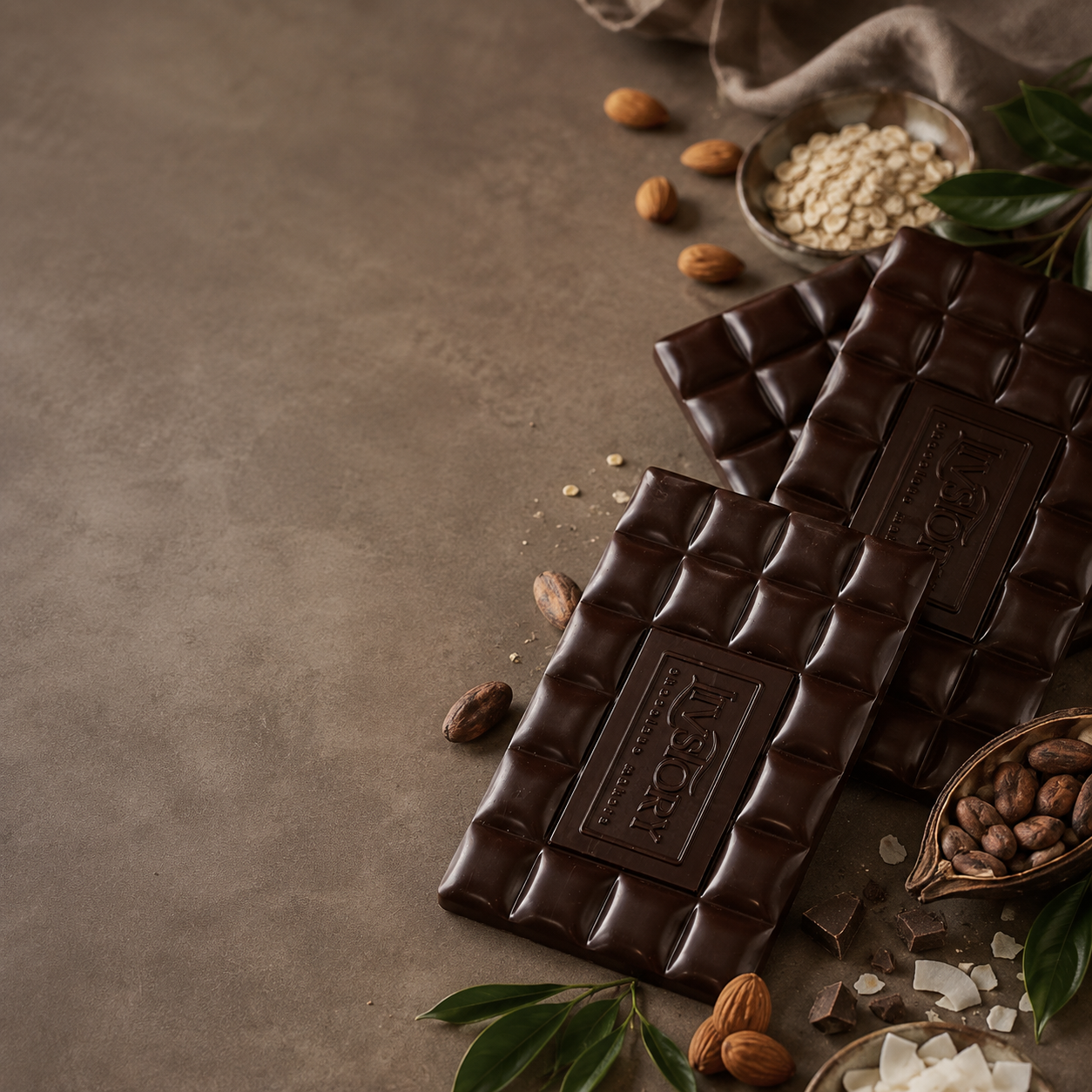
First, there was the chocolate. Then came the question: Can we eliminate sugar without turning the product into a compromise? For certain Livstory recipes, we chose erythritol, a polyol used as a sweetener and known in the European Union as E968. Its role is simple: it allows us to build a recipe without added sugar, while keeping what we care about most at the center of the experience: cocoa. But there is one thing we want to make very clear. 'Sugar-free' does not automatically mean 'healthier,' and an ingredient shouldn't be turned into a promise just because it replaces another. Erythritol has a lower sweetening power than sugar and a technological profile that makes it useful in certain sugar-free products. As with other polyols, consumption in large quantities can cause gastrointestinal and laxative effects. In its re-evaluation, the European Food Safety Authority (EFSA) established an acceptable daily intake for erythritol of 0.5 g/kg of body weight per day, a value primarily intended to protect against laxative effects. In recent years, studies have also analyzed potential links between erythritol and cardiovascular risk. The subject continues to be researched, and the available data does not justify turning it into a simple 'good ingredient' vs. 'bad ingredient' story. That is exactly why we prefer transparency. For us, erythritol is an ingredient with a precise function in a specific recipe. Not a health promise. Not a reason to eat without limits. And not the thing that should define the bar. The goal remains the same as always: to make a chocolate you would choose for its taste. Not just for what is missing from it.
Sources & further reading
EFSA – Re-evaluation of erythritol (E968).